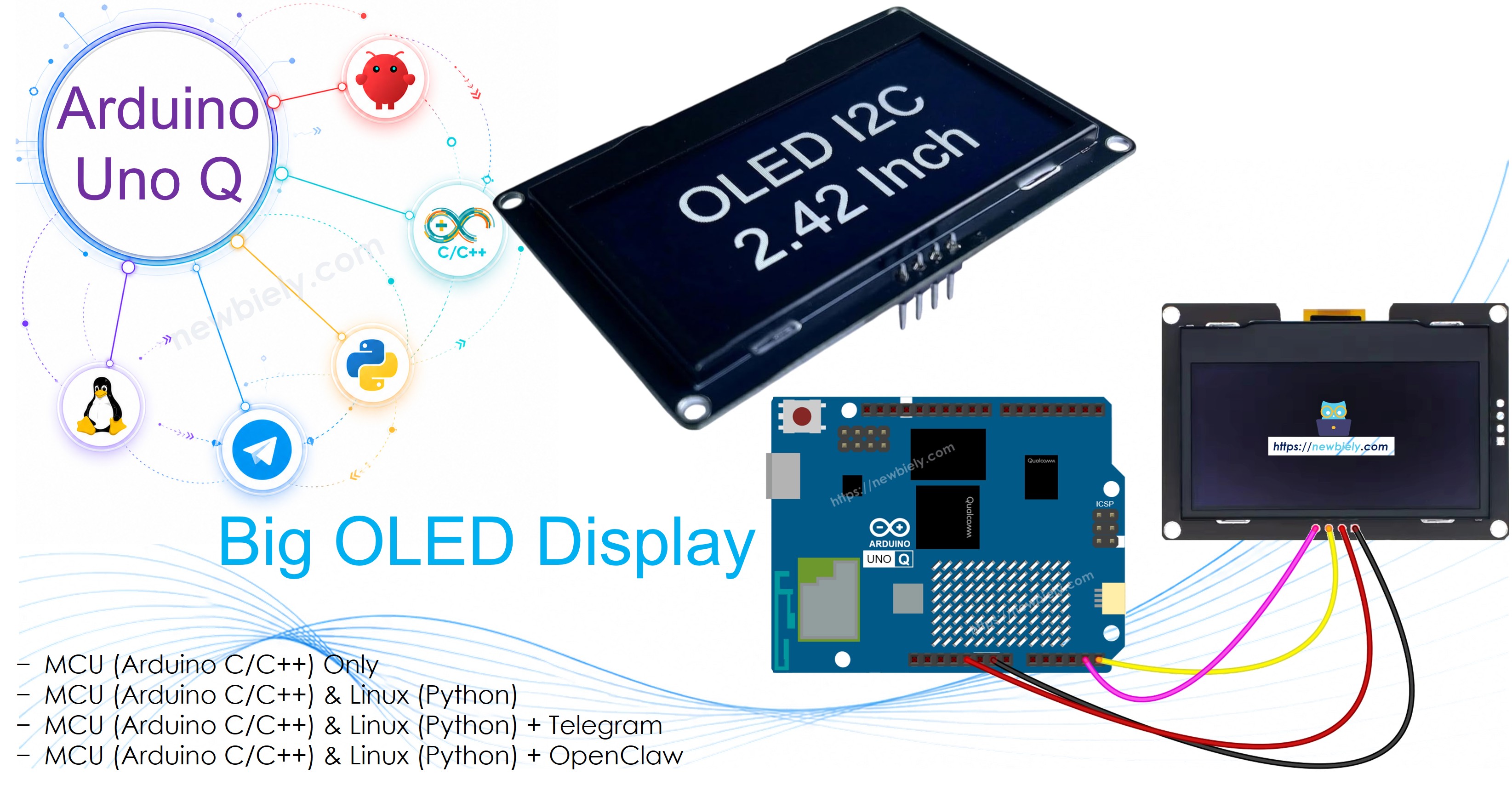
아두이노 우노 Q SSD1309 OLED 디스플레이 (2.42 인치)

이 튜토리얼은 Arduino UNO Q에서 2.42인치 SSD1309 OLED 128x64 디스플레이를 사용하는 방법을 보여줍니다 — 기본 텍스트 및 그래픽부터 Telegram을 통한 원격 제어까지.

Arduino UNO Q - ssd1309 oLED 디스플레이 2.42 inch

필요한 하드웨어

1×Arduino UNO Q 아마존
1×USB Cable for Arduino Uno Q 아마존
1×SSD1309 I2C OLED Display 128x64 (2.42 inch) 아마존
1×점퍼케이블 쿠팡 | 아마존
1×(추천) 아두이노 우노용 스크루 터미널 블록 쉴드 쿠팡 | 아마존
1×(추천) Sensors/Servo Expansion Shield for Arduino Uno 쿠팡 | 아마존
1×(추천) 아두이노 우노용 브레드보드 쉴드 쿠팡 | 아마존
1×(추천) 아두이노 우노용 케이스 쿠팡 | 아마존
1×(추천) 아두이노 우노용 프로토타이핑 베이스 플레이트 & 브레드보드 키트 아마존
공개: 이 포스팅 에 제공된 일부 링크는 아마존 제휴 링크입니다. 이 포스팅은 쿠팡 파트너스 활동의 일환으로, 이에 따른 일정액의 수수료를 제공받습니다.

SSD1309 2.42인치 OLED 디스플레이 정보

SSD1309는 2.42인치(때로는 2.4인치로 표시) I2C OLED 모듈에서 일반적으로 찾을 수 있는 128×64 OLED 드라이버 IC입니다. SSD1306과 레지스터 호환되지만 외부 VCC 레일을 사용합니다(breakout 보드의 온보드 부스트 컨버터로 투명하게 처리됨). 주요 특징:

  • 해상도: 128 × 64 픽셀
  • 인터페이스: I2C (필요한 와이어는 4개뿐)
  • 디스플레이 색상: OLED 물질에 따라 흰색, 파란색 또는 노란색 — 소프트웨어로 제어 불가
  • 시야각: 넓음, 자체 발광 픽셀 — 진한 검은색, 백라이트 불필요
  • 라이브러리: DIYables_OLED_SSD1309 사용 (Adafruit GFX 확장)

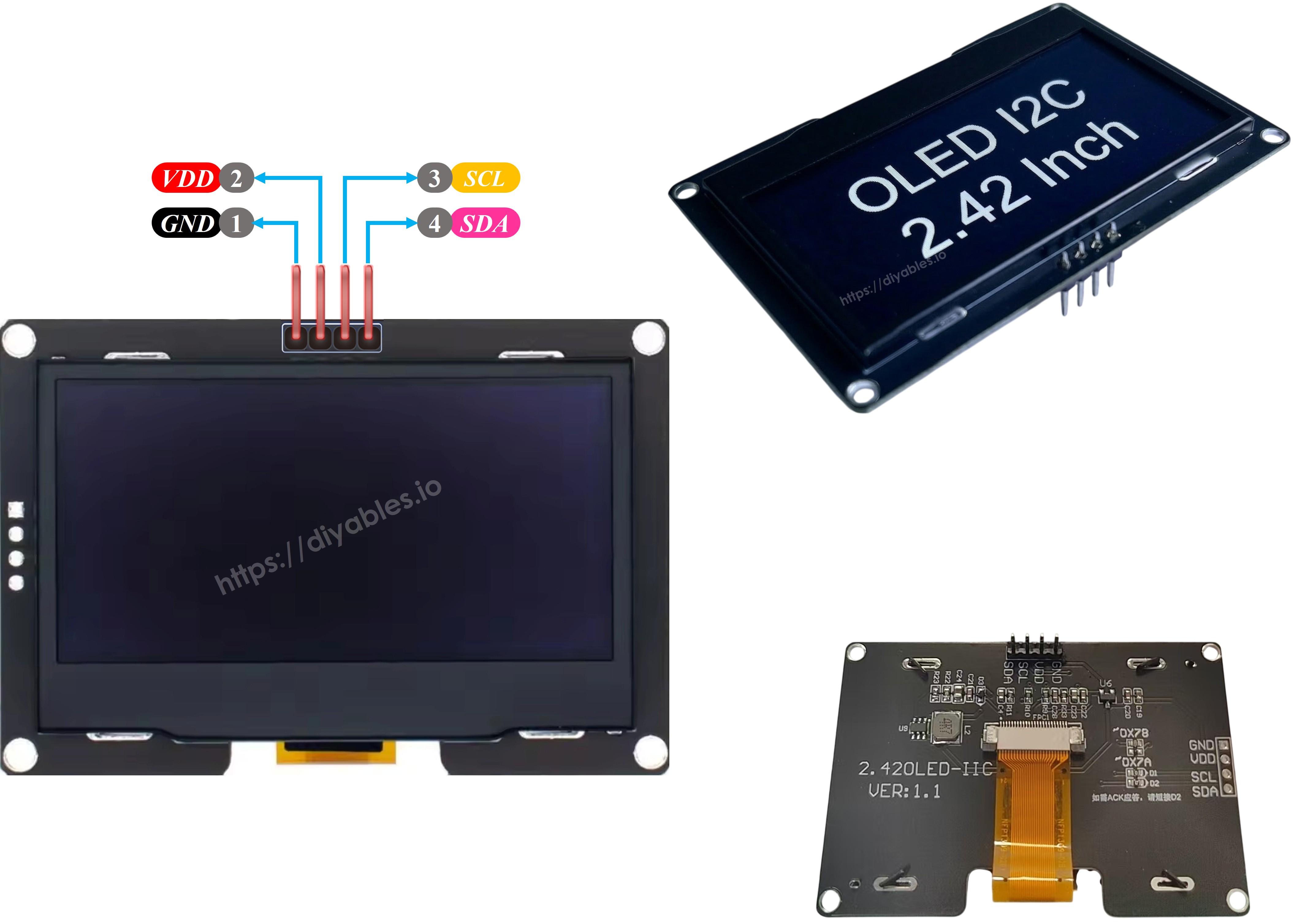
SSD1309 OLED 핀아웃

  • GNDGND에 연결
  • VCC — 5V에 연결
  • SCL — I2C 클록 신호
  • SDA — I2C 데이터 신호
ssd1309 oLED 사용법 핀아웃

※ 주의:

제조사에 따라 핀 순서가 다를 수 있습니다. 항상 OLED 모듈에 인쇄된 레이블을 사용하세요.

배선 다이어그램
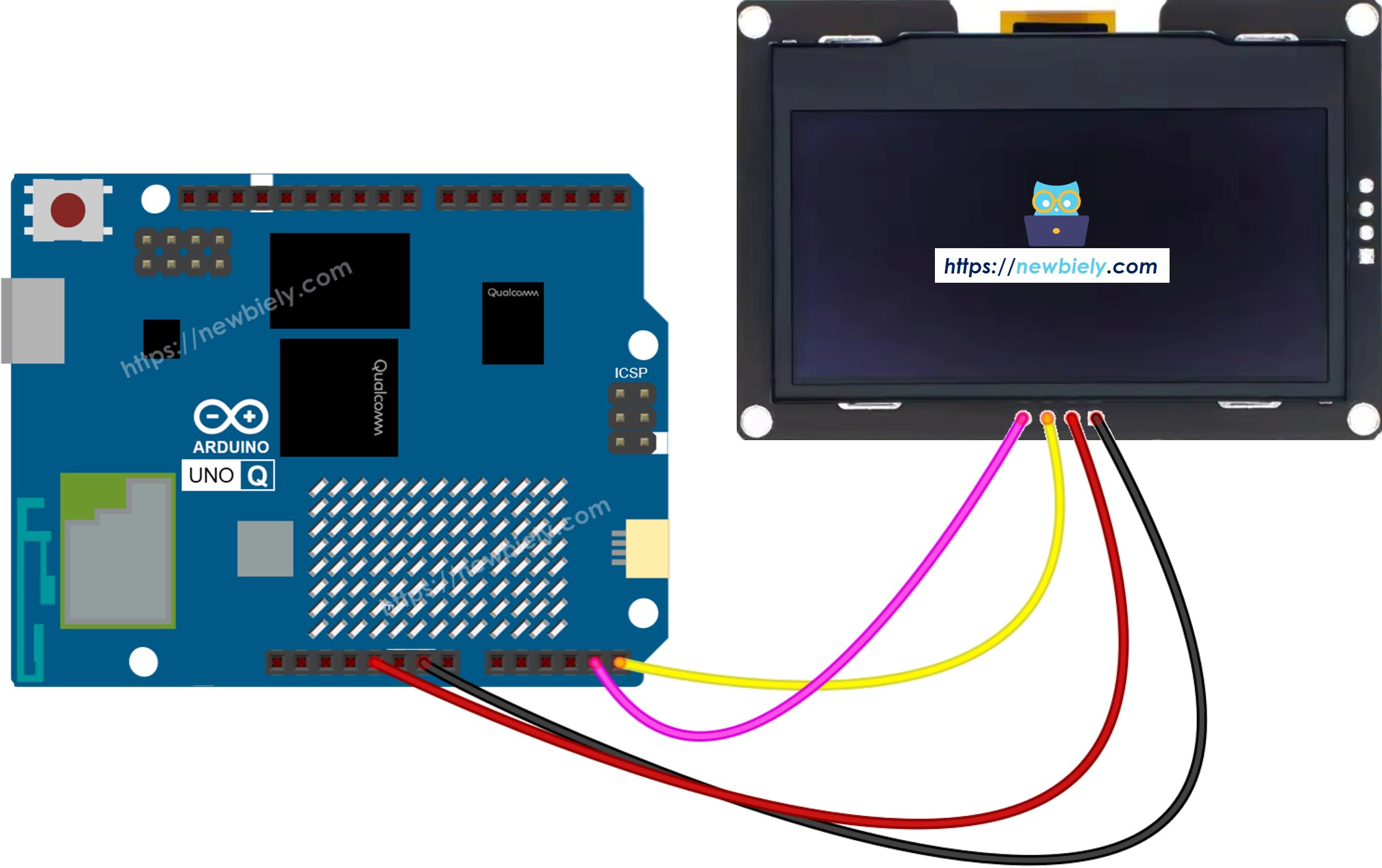
Arduino UNO Q ssd1309 oLED 연결 배선도

이 이미지는 Fritzing을 사용하여 만들어졌습니다. 이미지를 확대하려면 클릭하세요.

OLED 핀Arduino UNO Q 핀
GNDGND
VCC5V
SCLSCL
SDASDA

SSD1309 OLED를 프로그래밍하는 방법

  • 라이브러리 포함:
#include <Wire.h> #include <Adafruit_GFX.h> #include <DIYables_OLED_SSD1309.h>
  • 디스플레이 객체 생성:
#define SCREEN_WIDTH 128 #define SCREEN_HEIGHT 64 #define OLED_RESET -1 #define SCREEN_ADDRESS 0x3C DIYables_OLED_SSD1309 display(SCREEN_WIDTH, SCREEN_HEIGHT, &Wire, OLED_RESET);
  • setup()에서 초기화:
if (!display.begin(SSD1309_SWITCHCAPVCC, SCREEN_ADDRESS)) { while (true); // halt if display not found } display.clearDisplay();
  • 텍스트 표시:
display.setTextSize(2); display.setTextColor(SSD1309_PIXEL_ON); display.setCursor(0, 0); display.println("Hello!"); display.display(); // push buffer to screen — required!

※ 주의:

항상 display.display()를 호출하여 그리기 명령 후 버퍼를 물리적 화면으로 밀어냅니다.

Arduino UNO Q 코드 — SSD1309 OLED의 Hello World

Arduino UNO Q는 두 개의 프로세서를 가지고 있습니다: STM32 MCU(실시간 하드웨어 제어 처리) 및 Qualcomm MPU(Debian Linux 실행). 이 섹션에서는 STM32 MCU만 프로그래밍됩니다 — Linux 쪽은 유휴 상태입니다. 나중 섹션에서는 두 프로세서가 함께 작동하는 방법을 보여줍니다.

아래 스케치는 두 개의 다른 크기로 OLED에 텍스트를 표시합니다.

/* * 이 Arduino UNO Q 코드는 newbiely.kr 에서 개발되었습니다 * 이 Arduino UNO Q 코드는 어떠한 제한 없이 공개 사용을 위해 제공됩니다. * 상세한 지침 및 연결도에 대해서는 다음을 방문하세요: * https://newbiely.kr/tutorials/arduino-uno-q/arduino-uno-q-ssd1309-oled-display */ #include <Wire.h> #include <Adafruit_GFX.h> #include <DIYables_OLED_SSD1309.h> #define SCREEN_WIDTH 128 #define SCREEN_HEIGHT 64 #define OLED_RESET -1 #define SCREEN_ADDRESS 0x3C DIYables_OLED_SSD1309 display(SCREEN_WIDTH, SCREEN_HEIGHT, &Wire, OLED_RESET); void setup() { Monitor.begin(9600); if (!display.begin(SSD1309_SWITCHCAPVCC, SCREEN_ADDRESS)) { Monitor.println(F("SSD1309 allocation failed")); for (;;); } display.clearDisplay(); display.setTextSize(1); // 6x8 pixels per character display.setTextColor(SSD1309_PIXEL_ON); // turn pixels on display.setCursor(0, 0); display.println(F("Hello, World!")); display.println(); display.setTextSize(2); // 12x16 pixels per character display.println(F("DIYables")); display.setTextSize(1); display.println(); display.println(F("SSD1309 OLED 128x64")); display.display(); // push buffer to screen } void loop() {}

빠른 단계

  • Arduino UNO Q 처음 사용? 진행하기 전에 아두이노 우노 Q 시작하기 튜토리얼을 따라 개발 환경을 준비하세요.
  • OLED 배선: GND→GND, VCC→5V, SCL→SCL, SDA→SDA를 연결합니다.
  • 연결: Arduino UNO Q를 USB-C 케이블로 컴퓨터에 연결합니다.
  • Arduino App Lab 열기: Arduino App Lab을 시작하고 Arduino UNO Q를 감지할 때까지 기다립니다.
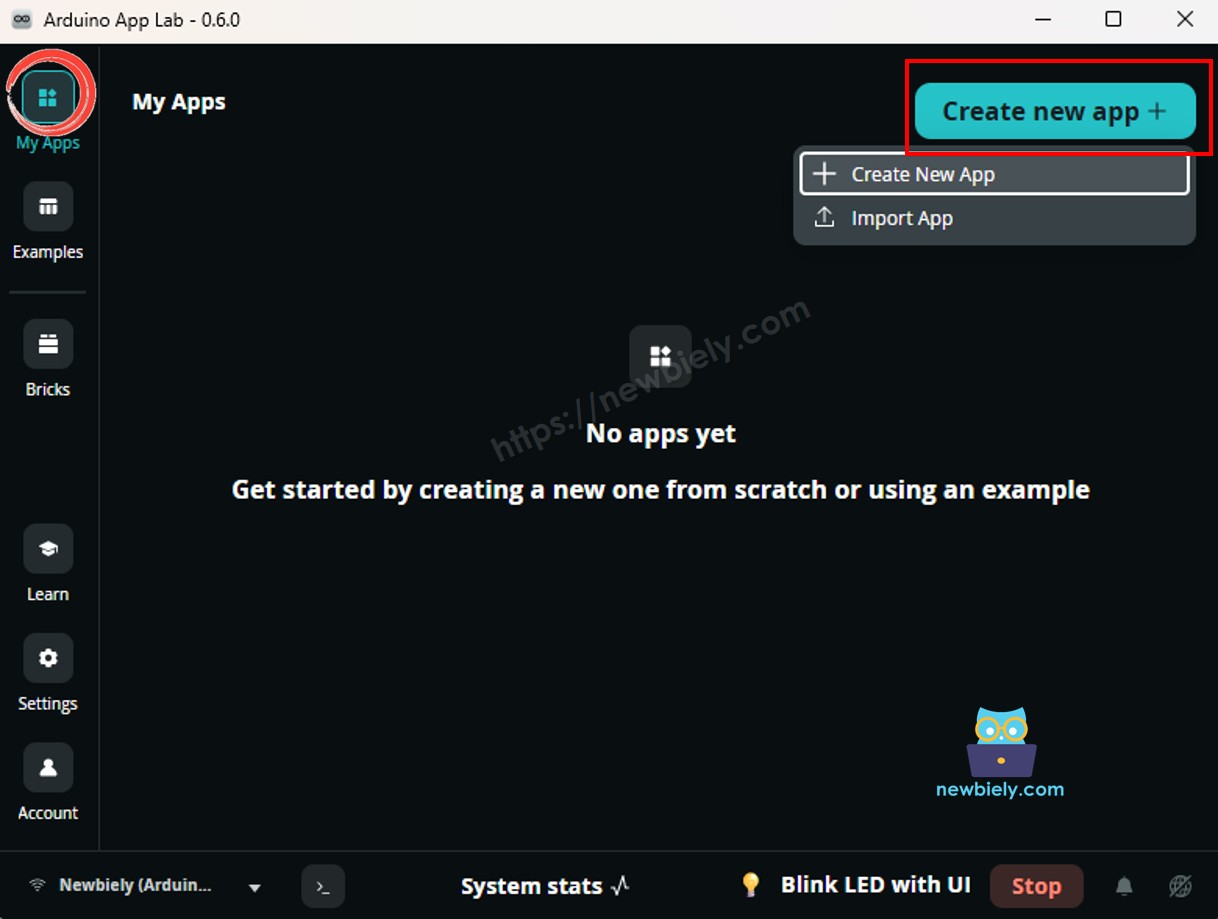
  • 새 App 만들기: Create New App 버튼을 클릭합니다.
create new app in 아두이노 app lab on Arduino UNO Q
  • App에 이름을 지정합니다(예: DIYables_SSD1309)
  • Create를 클릭하여 확인합니다.
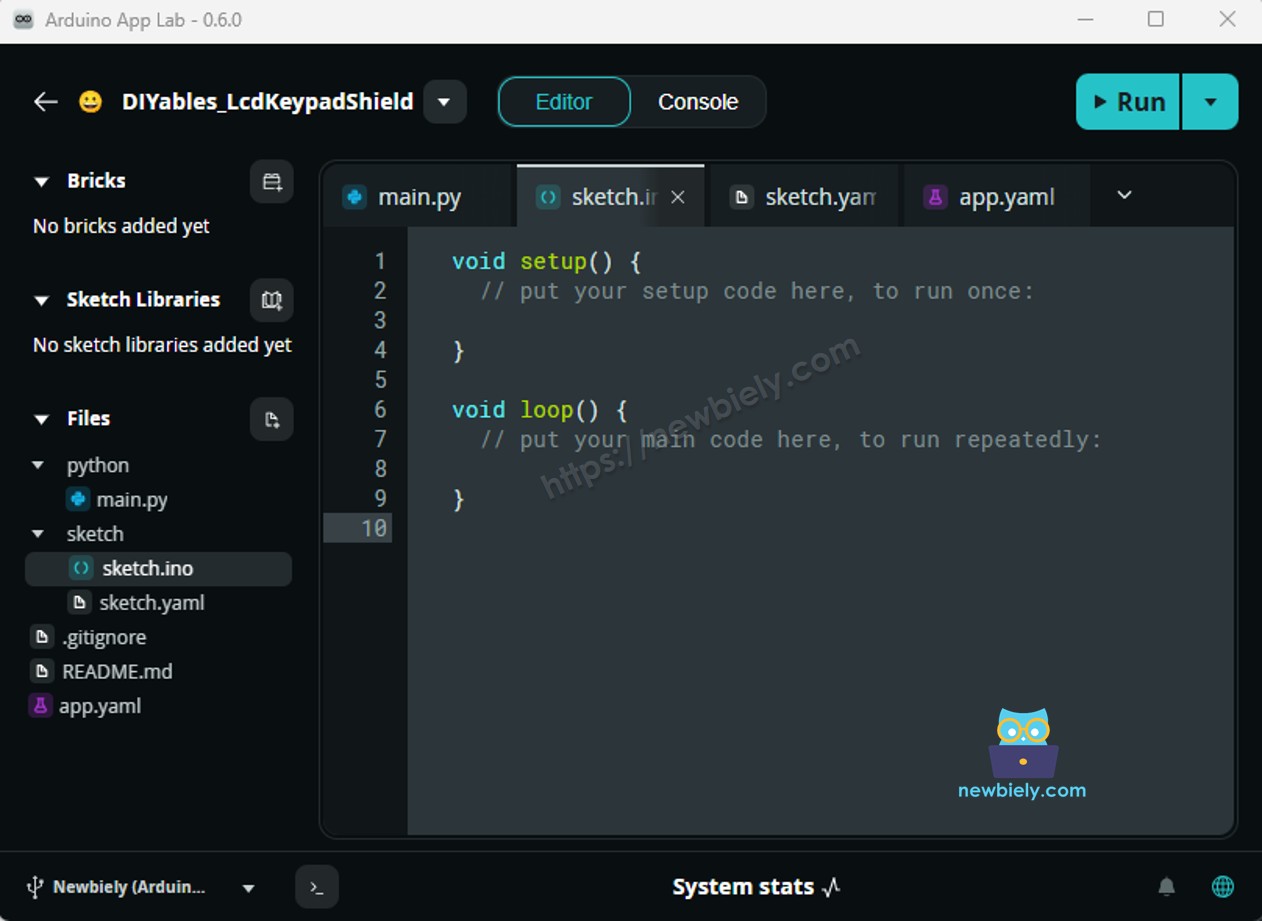
  • 새 App 내에 생성된 폴더 및 파일 세트가 표시됩니다.
아두이노 app lab app folders and files on Arduino UNO Q
  • sketch/sketch.ino 파일을 찾습니다 — 이곳이 MCU 스케치를 붙여넣을 위치입니다.
  • 스케치 붙여넣기: 위의 MCU 코드를 복사하여 스케치 파일에 붙여넣습니다.
    • Install the library: Click the Add sketch library button (the open book icon with a + sign) in the left sidebar.
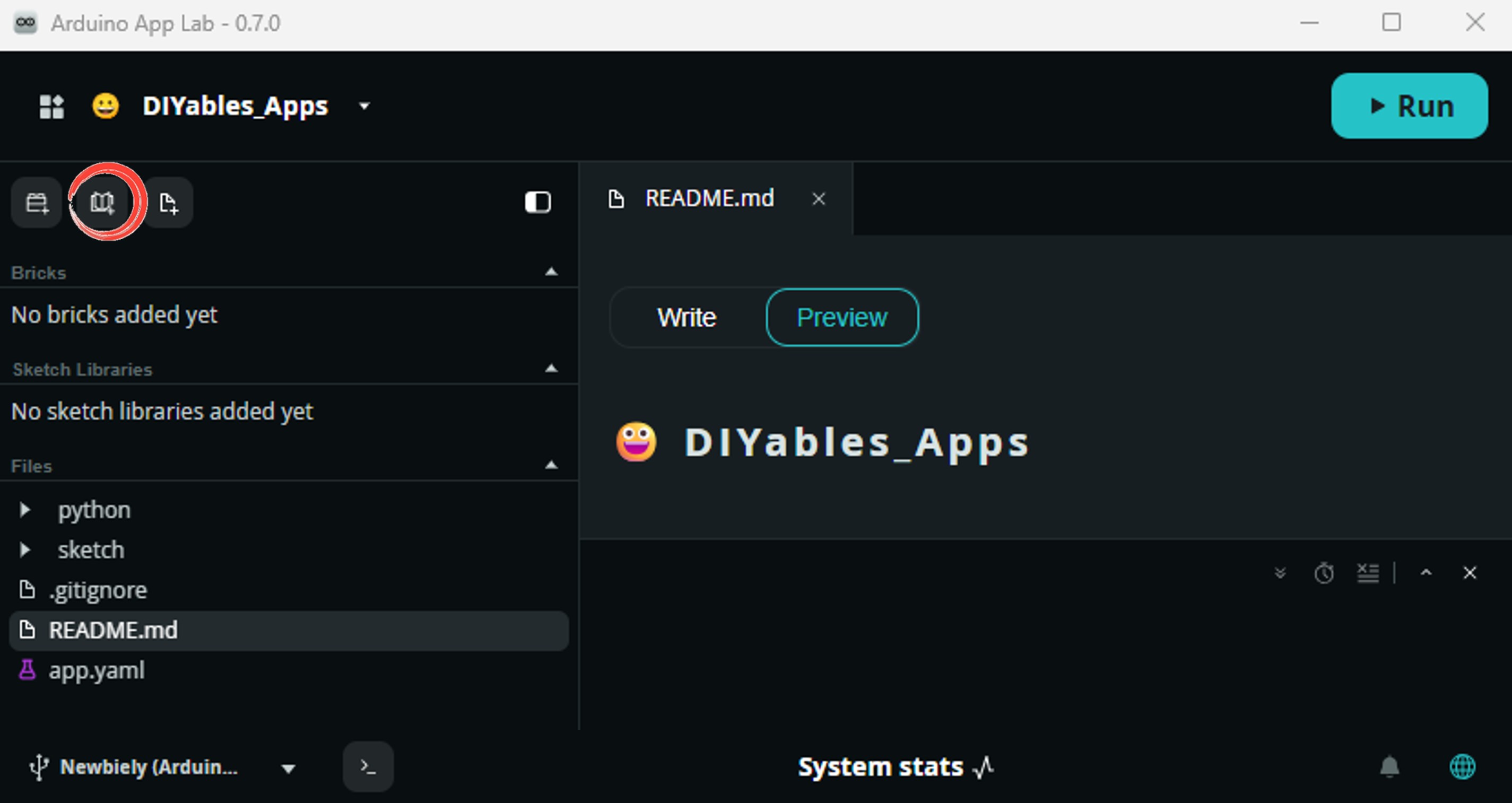
    add sketch 라이브러리 in 아두이노 app lab on Arduino UNO Q
    • Search for Arduino_RouterBridge created by Arduino and click the Install button.
    My Apps / DIYables Apps
    Run
    Bricks
    No bricks added...
    Sketch Libraries
    No sketch libra...
    Files
    python
    sketch
    .gitignore
    README.md
    app.yaml
    sketch.ino
    Add sketch library
    Arduino_RouterBridge Arduino

    This library provides a simple RPC bridge for Arduino UNO Q boards, allowing communication between the board and other devices using MsgPack serialization.

    0.4.1
    Install
    More Info
    • Search for DIYables_OLED_SSD1309 created by DIYables and click the Install button.
    My Apps / DIYables Apps
    Run
    Bricks
    No bricks added...
    Sketch Libraries
    No sketch libra...
    Files
    python
    sketch
    .gitignore
    README.md
    app.yaml
    sketch.ino
    Add sketch library
    DIYables_OLED_SSD1309 DIYables

    Supports 128x64 and 128x32 SSD1309-based monochrome OLED displays over I2C. API compatible with Adafruit_SSD1306. Extends Adafruit_GFX for full graphics support. Works with all Arduino-compatible boards.

    1.0.2
    Install
    More Info
    • 업로드: Arduino App Lab의 Run 버튼을 클릭하여 STM32로 컴파일 및 업로드합니다.
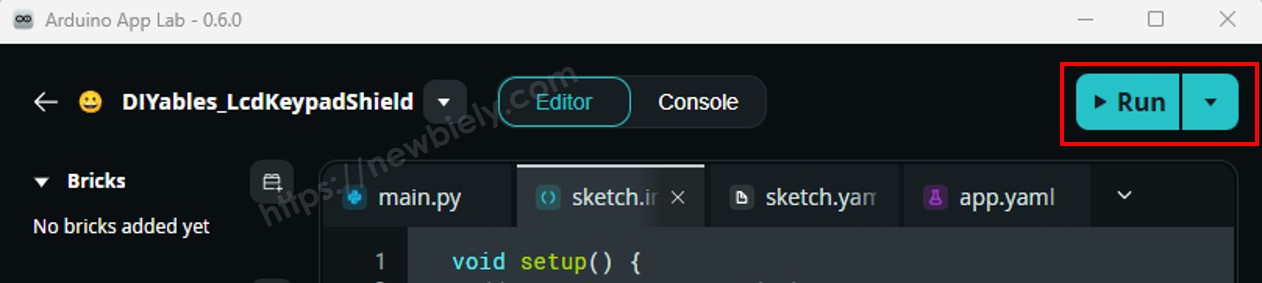
    click run 버튼 in 아두이노 app lab on Arduino UNO Q

    OLED를 보면 "Hello, World!", "DIYables", "SSD1309 OLED 128x64"가 표시됩니다!

    Arduino UNO Q 코드 — SSD1309 OLED에 텍스트 표시

    이 예는 다양한 텍스트 크기와 정수, 부동소수점 및 16진수를 OLED에 표시하는 방법을 보여줍니다.

    /* * 이 Arduino UNO Q 코드는 newbiely.kr 에서 개발되었습니다 * 이 Arduino UNO Q 코드는 어떠한 제한 없이 공개 사용을 위해 제공됩니다. * 상세한 지침 및 연결도에 대해서는 다음을 방문하세요: * https://newbiely.kr/tutorials/arduino-uno-q/arduino-uno-q-ssd1309-oled-display */ #include <Wire.h> #include <Adafruit_GFX.h> #include <DIYables_OLED_SSD1309.h> #define SCREEN_WIDTH 128 #define SCREEN_HEIGHT 64 #define OLED_RESET -1 #define SCREEN_ADDRESS 0x3C DIYables_OLED_SSD1309 display(SCREEN_WIDTH, SCREEN_HEIGHT, &Wire, OLED_RESET); void setup() { Monitor.begin(9600); if (!display.begin(SSD1309_SWITCHCAPVCC, SCREEN_ADDRESS)) { Monitor.println(F("SSD1309 allocation failed")); for (;;); } delay(2000); display.clearDisplay(); display.setTextSize(1); display.setTextColor(SSD1309_PIXEL_ON); display.setCursor(0, 10); display.println(F("Text size = 1")); display.display(); delay(2000); display.setTextSize(2); display.setCursor(0, 30); display.println(F("Size = 2")); display.display(); delay(2000); display.clearDisplay(); display.setTextSize(1); display.setCursor(0, 0); display.println(F("Display integer:")); display.println(12345); display.println(); display.println(F("Display float:")); display.println(1.2345); display.println(); display.println(F("Display HEX:")); display.println(0xABCD, HEX); display.display(); } void loop() {}

    빠른 단계

    • 위의 코드를 복사하여 sketch/sketch.ino에 붙여넣습니다.
    • Arduino App Lab의 Run 버튼을 클릭합니다.
    click run 버튼 in 아두이노 app lab on Arduino UNO Q

    OLED는 텍스트 크기 데모를 순환한 다음 정수, 부동소수점 및 16진수를 표시합니다.

    유용한 디스플레이 함수 참고 자료

    일반적으로 사용되는 SSD1309 OLED 함수의 빠른 참고 자료:

    • display.clearDisplay() — 프레임 버퍼 지우기 (모든 픽셀 꺼짐)
    • display.display() — 버퍼를 화면으로 밀어냅니다 — 모든 그리기 호출 후 필수
    • display.drawPixel(x, y, color) — 단일 픽셀 설정 또는 해제
    • display.setTextSize(n) — 글꼴을 배수 *n*만큼 확대 (1 = 6×8 px, 2 = 12×16 px, …)
    • display.setCursor(x, y) — 텍스트 커서를 픽셀 좌표 *(x, y)*로 이동
    • display.setTextColor(SSD1309_PIXEL_ON) — 텍스트 전경만 (투명 배경)
    • display.setTextColor(SSD1309_PIXEL_OFF, SSD1309_PIXEL_ON) — 명시적 배경이 있는 텍스트
    • display.println("message") — 문자열을 인쇄하고 다음 줄로 이동
    • display.println(number) — 정수를 10진수로 인쇄
    • display.println(number, HEX) — 정수를 16진수로 인쇄
    • display.startscrollright(start, stop) — 페이지 간 하드웨어 오른쪽 스크롤
    • display.startscrollleft(start, stop) — 하드웨어 왼쪽 스크롤
    • display.startscrolldiagright(start, stop) — 대각선 오른쪽 스크롤
    • display.startscrolldiagleft(start, stop) — 대각선 왼쪽 스크롤
    • display.stopscroll() — 활성 하드웨어 스크롤 중지
    • display.setContrast(value) — 밝기 조정 (0–255)
    • display.dim(true/false) — 빠른 어둡게 토글
    • display.invertDisplay(true/false) — 하드웨어 수준 색상 반전

    Arduino UNO Q 코드 — SSD1309 OLED에 도형 그리기

    DIYables_OLED_SSD1309 라이브러리는 Adafruit_GFX에서 상속되어 픽셀, 선, 직사각형, 채워진 직사각형, 원, 채워진 원, 삼각형, 채워진 삼각형 및 둥근 직사각형을 제공합니다. 아래 스케치는 모두 순환합니다.

    /* * 이 Arduino UNO Q 코드는 newbiely.kr 에서 개발되었습니다 * 이 Arduino UNO Q 코드는 어떠한 제한 없이 공개 사용을 위해 제공됩니다. * 상세한 지침 및 연결도에 대해서는 다음을 방문하세요: * https://newbiely.kr/tutorials/arduino-uno-q/arduino-uno-q-ssd1309-oled-display */ #include <Wire.h> #include <Adafruit_GFX.h> #include <DIYables_OLED_SSD1309.h> #define SCREEN_WIDTH 128 #define SCREEN_HEIGHT 64 #define OLED_RESET -1 #define SCREEN_ADDRESS 0x3C DIYables_OLED_SSD1309 display(SCREEN_WIDTH, SCREEN_HEIGHT, &Wire, OLED_RESET); void setup() { Monitor.begin(9600); if (!display.begin(SSD1309_SWITCHCAPVCC, SCREEN_ADDRESS)) { Monitor.println(F("SSD1309 allocation failed")); for (;;); } display.clearDisplay(); } void loop() { // --- Pixels --- display.clearDisplay(); for (int16_t i = 0; i < display.width(); i += 4) { display.drawPixel(i, i * display.height() / display.width(), SSD1309_PIXEL_ON); } display.display(); delay(1500); // --- Lines --- display.clearDisplay(); for (int16_t i = 0; i < display.width(); i += 8) { display.drawLine(0, 0, i, display.height() - 1, SSD1309_PIXEL_ON); } for (int16_t i = 0; i < display.height(); i += 8) { display.drawLine(0, 0, display.width() - 1, i, SSD1309_PIXEL_ON); } display.display(); delay(1500); // --- Rectangles --- display.clearDisplay(); for (int16_t i = 0; i < display.height() / 2; i += 4) { display.drawRect(i, i, display.width() - 2 * i, display.height() - 2 * i, SSD1309_PIXEL_ON); } display.display(); delay(1500); // --- Filled rectangles (inverse) --- display.clearDisplay(); for (int16_t i = 0; i < display.height() / 2; i += 6) { display.fillRect(i, i, display.width() - 2 * i, display.height() - 2 * i, SSD1309_PIXEL_INVERSE); } display.display(); delay(1500); // --- Circles --- display.clearDisplay(); for (int16_t i = max(display.width(), display.height()) / 2; i > 0; i -= 5) { display.drawCircle(display.width() / 2, display.height() / 2, i, SSD1309_PIXEL_ON); } display.display(); delay(1500); // --- Filled circles (inverse) --- display.clearDisplay(); for (int16_t i = max(display.width(), display.height()) / 2; i > 0; i -= 6) { display.fillCircle(display.width() / 2, display.height() / 2, i, SSD1309_PIXEL_INVERSE); } display.display(); delay(1500); // --- Rounded rectangles --- display.clearDisplay(); for (int16_t i = 0; i < display.height() / 2 - 2; i += 4) { display.drawRoundRect(i, i, display.width() - 2 * i, display.height() - 2 * i, display.height() / 4, SSD1309_PIXEL_ON); } display.display(); delay(1500); // --- Filled rounded rectangles (inverse) --- display.clearDisplay(); for (int16_t i = 0; i < display.height() / 2 - 2; i += 4) { display.fillRoundRect(i, i, display.width() - 2 * i, display.height() - 2 * i, display.height() / 4, SSD1309_PIXEL_INVERSE); } display.display(); delay(1500); // --- Triangles --- display.clearDisplay(); for (int16_t i = 0; i < max(display.width(), display.height()) / 2; i += 5) { display.drawTriangle( display.width() / 2, display.height() / 2 - i, display.width() / 2 - i, display.height() / 2 + i, display.width() / 2 + i, display.height() / 2 + i, SSD1309_PIXEL_ON); } display.display(); delay(1500); // --- Filled triangles (inverse) --- display.clearDisplay(); for (int16_t i = max(display.width(), display.height()) / 2; i > 0; i -= 6) { display.fillTriangle( display.width() / 2, display.height() / 2 - i, display.width() / 2 - i, display.height() / 2 + i, display.width() / 2 + i, display.height() / 2 + i, SSD1309_PIXEL_INVERSE); } display.display(); delay(1500); }

    빠른 단계

    • 위의 코드를 복사하여 sketch/sketch.ino에 붙여넣습니다.
    • Arduino App Lab의 Run 버튼을 클릭합니다.
    click run 버튼 in 아두이노 app lab on Arduino UNO Q

    OLED는 모든 도형 — 픽셀, 선, 직사각형, 원, 둥근 직사각형 및 삼각형을 순환합니다!

    Arduino UNO Q 코드 — SSD1309 OLED에서 하드웨어 스크롤

    SSD1309는 CPU 작업 없이 콘텐츠를 이동하는 내장 하드웨어 스크롤 엔진을 가지고 있습니다. 라이브러리는 4가지 스크롤 방향을 제공합니다: 오른쪽, 왼쪽, 대각선 오른쪽 및 대각선 왼쪽.

    ※ 주의:

    항상 스크롤을 시작하기 전에 display.display()를 호출하여 콘텐츠를 OLED로 전송합니다. 새 콘텐츠를 그리기 전에 stopscroll()를 호출합니다.

    /* * 이 Arduino UNO Q 코드는 newbiely.kr 에서 개발되었습니다 * 이 Arduino UNO Q 코드는 어떠한 제한 없이 공개 사용을 위해 제공됩니다. * 상세한 지침 및 연결도에 대해서는 다음을 방문하세요: * https://newbiely.kr/tutorials/arduino-uno-q/arduino-uno-q-ssd1309-oled-display */ #include <Wire.h> #include <Adafruit_GFX.h> #include <DIYables_OLED_SSD1309.h> #define SCREEN_WIDTH 128 #define SCREEN_HEIGHT 64 #define OLED_RESET -1 #define SCREEN_ADDRESS 0x3C DIYables_OLED_SSD1309 display(SCREEN_WIDTH, SCREEN_HEIGHT, &Wire, OLED_RESET); void setup() { Monitor.begin(9600); if (!display.begin(SSD1309_SWITCHCAPVCC, SCREEN_ADDRESS)) { Monitor.println(F("SSD1309 allocation failed")); for (;;); } display.clearDisplay(); display.setTextSize(2); display.setTextColor(SSD1309_PIXEL_ON); display.setCursor(10, 24); display.println(F("DIYables")); display.display(); delay(2000); } void loop() { // Scroll right across all pages display.startscrollright(0x00, 0x07); delay(3000); display.stopscroll(); delay(500); // Scroll left display.startscrollleft(0x00, 0x07); delay(3000); display.stopscroll(); delay(500); // Diagonal scroll right display.startscrolldiagright(0x00, 0x07); delay(3000); display.stopscroll(); delay(500); // Diagonal scroll left display.startscrolldiagleft(0x00, 0x07); delay(3000); display.stopscroll(); delay(500); }

    빠른 단계

    • 위의 코드를 복사하여 sketch/sketch.ino에 붙여넣습니다.
    • Arduino App Lab의 Run 버튼을 클릭합니다.
    click run 버튼 in 아두이노 app lab on Arduino UNO Q

    OLED는 "DIYables"를 오른쪽, 왼쪽, 대각선 오른쪽 및 대각선 왼쪽으로 스크롤하여 계속 반복합니다.

    Arduino UNO Q 코드 — SSD1309 OLED에 비트맵 이미지 표시

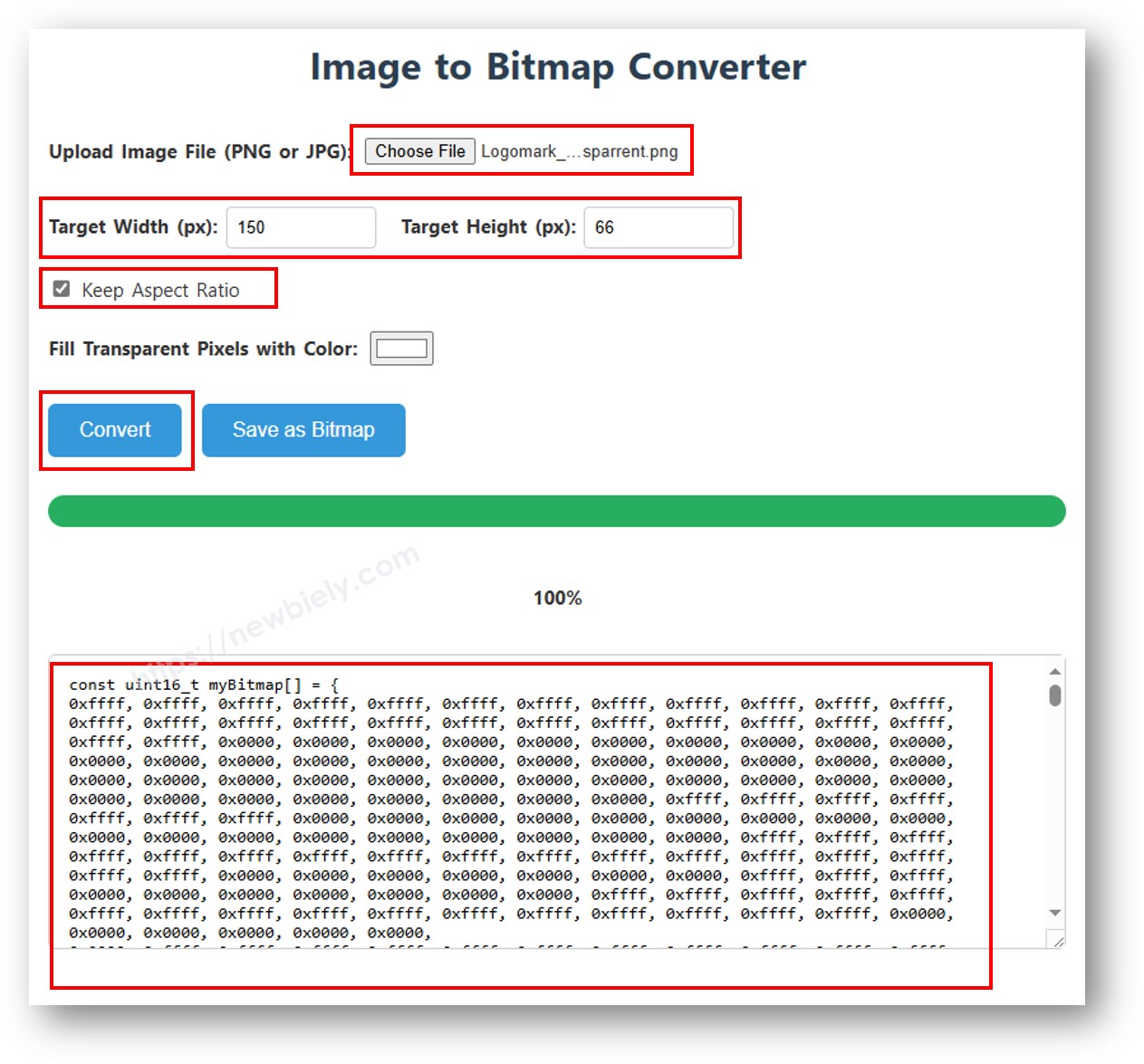
    SSD1309 OLED에 비트맵을 표시하려면 먼저 이미지를 C 바이트 배열로 변환해야 합니다. 무료 이미지를 비트맵으로 변환 도구를 사용합니다:

    1. 이미지 파일 (PNG, JPG, BMP 등)을 업로드합니다.
    2. 캔버스 크기를 128×64(또는 더 작게)로 설정합니다.
    3. Arduino code를 출력 형식으로 선택합니다.
    4. 생성된 배열을 스케치에 복사합니다.
    image to bitmap array

    아래 스케치는 16×16 하트 아이콘을 표시한 다음 전체 128×64 DIYables 로고로 전환합니다 — 둘 다 코드에 바이트 배열로 저장됩니다:

    /* * 이 Arduino UNO Q 코드는 newbiely.kr 에서 개발되었습니다 * 이 Arduino UNO Q 코드는 어떠한 제한 없이 공개 사용을 위해 제공됩니다. * 상세한 지침 및 연결도에 대해서는 다음을 방문하세요: * https://newbiely.kr/tutorials/arduino-uno-q/arduino-uno-q-ssd1309-oled-display */ #include <Wire.h> #include <Adafruit_GFX.h> #include <DIYables_OLED_SSD1309.h> #define SCREEN_WIDTH 128 #define SCREEN_HEIGHT 64 #define OLED_RESET -1 #define SCREEN_ADDRESS 0x3C DIYables_OLED_SSD1309 display(SCREEN_WIDTH, SCREEN_HEIGHT, &Wire, OLED_RESET); // 16x16 heart bitmap const unsigned char heart16x16[] PROGMEM = { 0x00, 0x00, 0x03, 0xc0, 0x0f, 0xf0, 0x1f, 0xf8, 0x3f, 0xfc, 0x7f, 0xfe, 0xff, 0xff, 0xff, 0xff, 0xff, 0xff, 0xff, 0xff, 0x7f, 0xfe, 0x3f, 0xfc, 0x1f, 0xf8, 0x0f, 0xf0, 0x03, 0xc0, 0x00, 0x00 }; // 128x64 DIYables logo bitmap const unsigned char diyablesLogo[] PROGMEM = { 0xff, 0xff, 0xff, 0xff, 0xff, 0xff, 0xff, 0xff, 0xff, 0xff, 0xff, 0xff, 0xff, 0xff, 0xff, 0xff, 0xff, 0xff, 0xff, 0xff, 0xff, 0xff, 0xff, 0xff, 0xff, 0xff, 0xff, 0xff, 0xff, 0xff, 0xff, 0xff, 0xff, 0xff, 0xfe, 0x00, 0x07, 0xff, 0xff, 0xff, 0xff, 0xff, 0xff, 0x80, 0x01, 0xff, 0xff, 0xff, 0xff, 0xff, 0xe0, 0x00, 0x00, 0xff, 0xff, 0xff, 0xff, 0xff, 0xfc, 0x00, 0x00, 0x3f, 0xff, 0xff, 0xff, 0xff, 0x80, 0x00, 0x00, 0x1f, 0xff, 0xff, 0xff, 0xff, 0xe0, 0x00, 0x00, 0x07, 0xff, 0xff, 0xff, 0xfe, 0x00, 0x00, 0x00, 0x07, 0xff, 0xff, 0xff, 0xff, 0x80, 0x00, 0x00, 0x01, 0xff, 0xff, 0xff, 0xfc, 0x00, 0x00, 0x00, 0x03, 0xff, 0xff, 0xff, 0xff, 0x00, 0x00, 0x00, 0x00, 0xff, 0xff, 0xff, 0xf0, 0x00, 0x00, 0x00, 0x00, 0xff, 0xff, 0xff, 0xfc, 0x00, 0x00, 0x00, 0x00, 0x3f, 0xff, 0xff, 0xe0, 0x00, 0x00, 0x00, 0x00, 0x3f, 0xff, 0xff, 0xf0, 0x00, 0x00, 0x00, 0x00, 0x1f, 0xff, 0xff, 0xc0, 0x00, 0x00, 0x00, 0x00, 0x1f, 0xff, 0xff, 0xe0, 0x00, 0x00, 0x00, 0x00, 0x0f, 0xff, 0xff, 0x80, 0x00, 0x00, 0x00, 0x00, 0x0f, 0xff, 0xff, 0xc0, 0x00, 0x00, 0x00, 0x00, 0x07, 0xff, 0xff, 0x00, 0x00, 0x00, 0x00, 0x00, 0x03, 0xff, 0xff, 0x80, 0x00, 0x00, 0x00, 0x00, 0x03, 0xff, 0xfe, 0x00, 0x00, 0x00, 0x00, 0x00, 0x01, 0xff, 0xfe, 0x00, 0x00, 0x00, 0x00, 0x00, 0x01, 0xff, 0xfc, 0x00, 0x00, 0xff, 0xf0, 0x00, 0x00, 0xff, 0xfc, 0x00, 0x00, 0x3f, 0xfc, 0x00, 0x00, 0xff, 0xfc, 0x00, 0x03, 0xff, 0xfc, 0x00, 0x00, 0x7f, 0xf8, 0x00, 0x00, 0xff, 0xff, 0x00, 0x00, 0xff, 0xf8, 0x00, 0x0f, 0xff, 0xff, 0x00, 0x00, 0x3f, 0xf0, 0x00, 0x03, 0xff, 0xff, 0xc0, 0x00, 0x7f, 0xf0, 0x00, 0x1f, 0xff, 0xff, 0xc0, 0x00, 0x1f, 0xe0, 0x00, 0x0f, 0xff, 0xff, 0xe0, 0x00, 0x7f, 0xf0, 0x00, 0x7f, 0xff, 0xff, 0xe0, 0x00, 0x0f, 0xc0, 0x00, 0x1f, 0xff, 0xff, 0xf8, 0x00, 0x3f, 0xe0, 0x00, 0xff, 0xff, 0xff, 0xf8, 0x00, 0x07, 0x80, 0x00, 0x7f, 0xff, 0xff, 0xfc, 0x00, 0x1f, 0xe0, 0x00, 0xff, 0xff, 0xff, 0xfc, 0x00, 0x03, 0x80, 0x00, 0xff, 0xff, 0xff, 0xfc, 0x00, 0x1f, 0xc0, 0x01, 0xff, 0xff, 0xff, 0xfe, 0x00, 0x03, 0x00, 0x01, 0xff, 0xff, 0xff, 0xfe, 0x00, 0x1f, 0xc0, 0x03, 0xff, 0xff, 0xff, 0xff, 0x00, 0x00, 0x00, 0x03, 0xff, 0xff, 0xff, 0xff, 0x00, 0x0f, 0xc0, 0x03, 0xff, 0xff, 0xff, 0xff, 0x80, 0x00, 0x00, 0x07, 0xff, 0xf0, 0x7f, 0xff, 0x00, 0x0f, 0xc0, 0x07, 0xff, 0xff, 0xff, 0xff, 0xc0, 0x00, 0x00, 0x0f, 0xff, 0xf0, 0x7f, 0xff, 0x80, 0x0f, 0x80, 0x07, 0xff, 0xff, 0xff, 0xff, 0xe0, 0x00, 0x00, 0x1f, 0xff, 0xf0, 0x7f, 0xff, 0x80, 0x07, 0x80, 0x0f, 0xff, 0xff, 0xff, 0xff, 0xf0, 0x00, 0x00, 0x3f, 0xff, 0xf0, 0x7f, 0xff, 0xc0, 0x07, 0x80, 0x0f, 0xff, 0xff, 0xff, 0xff, 0xf8, 0x00, 0x00, 0x7f, 0xff, 0xf0, 0x7f, 0xff, 0xc0, 0x07, 0x80, 0x0f, 0xfe, 0x00, 0x00, 0xff, 0xfc, 0x00, 0x00, 0xff, 0xfc, 0x00, 0x03, 0xff, 0xc0, 0x07, 0x80, 0x0f, 0xfe, 0x00, 0x00, 0xff, 0xfe, 0x00, 0x01, 0xff, 0xfc, 0x00, 0x01, 0xff, 0xc0, 0x07, 0x80, 0x0f, 0xfe, 0x00, 0x00, 0xff, 0xff, 0x00, 0x03, 0xff, 0xfc, 0x00, 0x01, 0xff, 0xc0, 0x07, 0x80, 0x0f, 0xfe, 0x00, 0x00, 0xff, 0xff, 0x00, 0x03, 0xff, 0xfc, 0x00, 0x01, 0xff, 0xc0, 0x07, 0x80, 0x0f, 0xfe, 0x00, 0x00, 0xff, 0xff, 0x00, 0x03, 0xff, 0xfc, 0x00, 0x01, 0xff, 0xc0, 0x07, 0x80, 0x0f, 0xff, 0xff, 0xff, 0xff, 0xfe, 0x00, 0x01, 0xff, 0xff, 0xe0, 0x7f, 0xff, 0xc0, 0x07, 0x80, 0x0f, 0xff, 0xff, 0xff, 0xff, 0xfc, 0x00, 0x00, 0xff, 0xff, 0xf0, 0x7f, 0xff, 0xc0, 0x07, 0x80, 0x0f, 0xff, 0xff, 0xff, 0xff, 0xfc, 0x00, 0x00, 0xff, 0xff, 0xf0, 0x7f, 0xff, 0xc0, 0x07, 0x80, 0x0f, 0xff, 0xff, 0xff, 0xff, 0xf8, 0x00, 0x00, 0x7f, 0xff, 0xf0, 0x7f, 0xff, 0xc0, 0x07, 0x80, 0x0f, 0xff, 0xff, 0xff, 0xff, 0xf0, 0x00, 0x00, 0x3f, 0xff, 0xf0, 0x7f, 0xff, 0x80, 0x07, 0x80, 0x07, 0xff, 0xff, 0xff, 0xff, 0xe0, 0x00, 0x00, 0x1f, 0xff, 0xf0, 0x7f, 0xff, 0x80, 0x07, 0xc0, 0x07, 0xff, 0xff, 0xff, 0xff, 0xc0, 0x00, 0x00, 0x0f, 0xff, 0xff, 0xff, 0xff, 0x80, 0x0f, 0xc0, 0x03, 0xff, 0xff, 0xff, 0xff, 0x80, 0x00, 0x00, 0x07, 0xff, 0xff, 0xff, 0xff, 0x00, 0x0f, 0xc0, 0x03, 0xff, 0xff, 0xff, 0xff, 0x00, 0x00, 0x00, 0x03, 0xff, 0xff, 0xff, 0xff, 0x00, 0x0f, 0xe0, 0x01, 0xff, 0xff, 0xff, 0xfe, 0x00, 0x03, 0x00, 0x01, 0xff, 0xff, 0xff, 0xfe, 0x00, 0x1f, 0xe0, 0x00, 0xff, 0xff, 0xff, 0xfc, 0x00, 0x07, 0x80, 0x00, 0xff, 0xff, 0xff, 0xfc, 0x00, 0x1f, 0xe0, 0x00, 0x7f, 0xff, 0xff, 0xf0, 0x00, 0x0f, 0xc0, 0x00, 0x3f, 0xff, 0xff, 0xf8, 0x00, 0x3f, 0xf0, 0x00, 0x3f, 0xff, 0xff, 0xe0, 0x00, 0x1f, 0xe0, 0x00, 0x1f, 0xff, 0xff, 0xf0, 0x00, 0x3f, 0xf8, 0x00, 0x1f, 0xff, 0xff, 0x80, 0x00, 0x3f, 0xe0, 0x00, 0x07, 0xff, 0xff, 0xe0, 0x00, 0x7f, 0xf8, 0x00, 0x0f, 0xff, 0xff, 0x00, 0x00, 0x7f, 0xf8, 0x00, 0x03, 0xff, 0xff, 0xc0, 0x00, 0x7f, 0xfc, 0x00, 0x03, 0xff, 0xf8, 0x00, 0x00, 0xff, 0xfc, 0x00, 0x00, 0xff, 0xff, 0x00, 0x00, 0xff, 0xfe, 0x00, 0x00, 0x7f, 0xe0, 0x00, 0x01, 0xff, 0xfe, 0x00, 0x00, 0x1f, 0xf8, 0x00, 0x01, 0xff, 0xfe, 0x00, 0x00, 0x00, 0x00, 0x00, 0x03, 0xff, 0xff, 0x00, 0x00, 0x00, 0x00, 0x00, 0x03, 0xff, 0xff, 0x00, 0x00, 0x00, 0x00, 0x00, 0x07, 0xff, 0xff, 0x80, 0x00, 0x00, 0x00, 0x00, 0x03, 0xff, 0xff, 0x80, 0x00, 0x00, 0x00, 0x00, 0x0f, 0xff, 0xff, 0xc0, 0x00, 0x00, 0x00, 0x00, 0x07, 0xff, 0xff, 0xc0, 0x00, 0x00, 0x00, 0x00, 0x1f, 0xff, 0xff, 0xe0, 0x00, 0x00, 0x00, 0x00, 0x0f, 0xff, 0xff, 0xe0, 0x00, 0x00, 0x00, 0x00, 0x7f, 0xff, 0xff, 0xf8, 0x00, 0x00, 0x00, 0x00, 0x3f, 0xff, 0xff, 0xf8, 0x00, 0x00, 0x00, 0x01, 0xff, 0xff, 0xff, 0xfe, 0x00, 0x00, 0x00, 0x00, 0x7f, 0xff, 0xff, 0xff, 0xff, 0xff, 0xff, 0xff, 0xff, 0xff, 0xff, 0xff, 0xff, 0xff, 0xff, 0xff, 0xff, 0xff, 0xff, 0xff, 0xff, 0xff, 0xff, 0xff, 0xff, 0xff, 0xff, 0xff, 0xff, 0xff, 0xff, 0xff, 0xff, 0xff }; void setup() { Monitor.begin(9600); if (!display.begin(SSD1309_SWITCHCAPVCC, SCREEN_ADDRESS)) { Monitor.println(F("SSD1309 allocation failed")); for (;;); } // Show heart icon centered display.clearDisplay(); display.drawBitmap( (SCREEN_WIDTH - 16) / 2, (SCREEN_HEIGHT - 16) / 2, heart16x16, 16, 16, SSD1309_PIXEL_ON); display.display(); delay(3000); // Show full DIYables logo display.clearDisplay(); display.drawBitmap(0, 0, diyablesLogo, SCREEN_WIDTH, SCREEN_HEIGHT, SSD1309_PIXEL_ON); display.display(); } void loop() {}

    빠른 단계

    • 위의 코드를 복사하여 sketch/sketch.ino에 붙여넣습니다.
    • Arduino App Lab의 Run 버튼을 클릭합니다.
    click run 버튼 in 아두이노 app lab on Arduino UNO Q

    OLED는 3초 동안 하트 아이콘을 표시한 다음 DIYables 로고로 전환합니다.

    ※ 주의:

    비트맵 크기는 화면 해상도 (128×64)를 초과할 수 없습니다.

    Arduino UNO Q 코드 — SSD1309 OLED의 명암 및 어둡게

    SSD1309는 256개의 명암 레벨(0–255)을 지원합니다. 미세 제어를 위해 setContrast()를 사용하고 빠른 밝기 토글을 위해 dim()을 사용합니다.

    /* * 이 Arduino UNO Q 코드는 newbiely.kr 에서 개발되었습니다 * 이 Arduino UNO Q 코드는 어떠한 제한 없이 공개 사용을 위해 제공됩니다. * 상세한 지침 및 연결도에 대해서는 다음을 방문하세요: * https://newbiely.kr/tutorials/arduino-uno-q/arduino-uno-q-ssd1309-oled-display */ #include <Wire.h> #include <Adafruit_GFX.h> #include <DIYables_OLED_SSD1309.h> #define SCREEN_WIDTH 128 #define SCREEN_HEIGHT 64 #define OLED_RESET -1 #define SCREEN_ADDRESS 0x3C DIYables_OLED_SSD1309 display(SCREEN_WIDTH, SCREEN_HEIGHT, &Wire, OLED_RESET); void setup() { Monitor.begin(9600); if (!display.begin(SSD1309_SWITCHCAPVCC, SCREEN_ADDRESS)) { Monitor.println(F("SSD1309 allocation failed")); for (;;); } // Draw a test pattern so the contrast change is visible display.clearDisplay(); display.fillRect(0, 0, 64, 32, SSD1309_PIXEL_ON); display.fillRect(64, 32, 64, 32, SSD1309_PIXEL_ON); display.setTextSize(1); display.setTextColor(SSD1309_PIXEL_INVERSE); display.setCursor(16, 28); display.println(F("Contrast Demo")); display.display(); delay(2000); } void loop() { // Ramp up for (int c = 0; c <= 255; c += 5) { display.setContrast((uint8_t)c); delay(30); } delay(1000); // Ramp down for (int c = 255; c >= 0; c -= 5) { display.setContrast((uint8_t)c); delay(30); } delay(1000); // Quick dim toggle display.dim(true); // minimum brightness delay(2000); display.dim(false); // restore delay(2000); }

    빠른 단계

    • 위의 코드를 복사하여 sketch/sketch.ino에 붙여넣습니다.
    • Arduino App Lab의 Run 버튼을 클릭합니다.
    click run 버튼 in 아두이노 app lab on Arduino UNO Q

    OLED 밝기가 위로 올라간 다음 내려가고, 어둡게 켜기/끄기 순환이 뒤따릅니다.

    Arduino UNO Q 코드 — SSD1309 OLED의 사용자 정의 외부 글꼴

    Adafruit GFX 라이브러리에는 많은 FreeFont 서체(Serif, Sans, Mono — 다양한 크기)가 포함되어 있습니다. 글꼴 헤더를 포함하고 setFont()를 호출하여 사용합니다.

    ※ 주의:

    외부 글꼴이 활성화되면 커서 Y 좌표는 왼쪽 위 모서리가 아닌 텍스트 기준선을 의미합니다. 이는 내장된 5×7 글꼴과 다릅니다.

    /* * 이 Arduino UNO Q 코드는 newbiely.kr 에서 개발되었습니다 * 이 Arduino UNO Q 코드는 어떠한 제한 없이 공개 사용을 위해 제공됩니다. * 상세한 지침 및 연결도에 대해서는 다음을 방문하세요: * https://newbiely.kr/tutorials/arduino-uno-q/arduino-uno-q-ssd1309-oled-display */ #include <Wire.h> #include <Adafruit_GFX.h> #include <DIYables_OLED_SSD1309.h> #include <Fonts/FreeSerif9pt7b.h> #include <Fonts/FreeSansBold12pt7b.h> #include <Fonts/FreeMono9pt7b.h> #define SCREEN_WIDTH 128 #define SCREEN_HEIGHT 64 #define OLED_RESET -1 #define SCREEN_ADDRESS 0x3C DIYables_OLED_SSD1309 display(SCREEN_WIDTH, SCREEN_HEIGHT, &Wire, OLED_RESET); void setup() { Monitor.begin(9600); if (!display.begin(SSD1309_SWITCHCAPVCC, SCREEN_ADDRESS)) { Monitor.println(F("SSD1309 allocation failed")); for (;;); } display.clearDisplay(); display.display(); } void loop() { // ── Built-in 5×7 font ── display.clearDisplay(); display.setFont(NULL); display.setTextSize(1); display.setTextColor(SSD1309_PIXEL_ON); display.setCursor(0, 0); display.println(F("Built-in 5x7 font")); display.println(); display.setTextSize(2); display.println(F("DIYables")); display.display(); delay(3000); // ── FreeSerif 9pt ── display.clearDisplay(); display.setFont(&FreeSerif9pt7b); display.setTextSize(1); display.setTextColor(SSD1309_PIXEL_ON); display.setCursor(0, 14); // Y = baseline display.println(F("FreeSerif 9pt")); display.setCursor(0, 38); display.println(F("DIYables OLED")); display.setCursor(0, 58); display.println(F("Hello World!")); display.display(); delay(3000); // ── FreeSansBold 12pt ── display.clearDisplay(); display.setFont(&FreeSansBold12pt7b); display.setTextSize(1); display.setTextColor(SSD1309_PIXEL_ON); display.setCursor(0, 20); display.println(F("SansBold")); display.setCursor(0, 52); display.println(F("DIYables")); display.display(); delay(3000); // ── FreeMono 9pt ── display.clearDisplay(); display.setFont(&FreeMono9pt7b); display.setTextSize(1); display.setTextColor(SSD1309_PIXEL_ON); display.setCursor(0, 14); display.println(F("FreeMono 9pt")); display.setCursor(0, 34); display.println(F("0123456789")); display.setCursor(0, 54); display.println(F("!@#$%^&*()")); display.display(); delay(3000); }

    빠른 단계

    • 위의 코드를 복사하여 sketch/sketch.ino에 붙여넣습니다.
    • Arduino App Lab의 Run 버튼을 클릭합니다.
    click run 버튼 in 아두이노 app lab on Arduino UNO Q

    OLED는 내장된 글꼴, FreeSerif 9pt, FreeSansBold 12pt 및 FreeMono 9pt를 순환합니다.

    Linux + MCU Bridge 프로그래밍

    Arduino UNO Q는 함께 작동하는 두 개의 프로세서를 가지고 있습니다: MPU (Qualcomm, Debian Linux 실행) 및 MCU (STM32, Arduino 스케치를 실행하는 Zephyr OS). 그들은 Arduino_RouterBridge 라이브러리를 사용하여 RPC를 통해 통신합니다 — 절대 원본 직렬 포트를 통하지 않습니다.

    • SSD1309 OLED는 MCU (STM32)에 연결됩니다 — I2C (SCL/SDA)를 통해. MCU만 직접 구동할 수 있습니다.
    • MPU는 OLED를 직접 제어할 수 없습니다Bridge.call("display_text", "text")를 호출하여 디스플레이를 업데이트하고 결과를 Monitor로 인쇄합니다.
    • MPU에는 Wi-Fi가 있습니다 — MPU가 Wi-Fi를 포함한 완전한 Debian Linux를 실행하기 때문에 Telegram 명령을 수신하고 OLED에 모든 메시지를 표시할 수 있습니다.
    • 통신: Linux 쪽의 Bridge.call()은 MCU 쪽의 Bridge.provide_safe() 함수를 호출합니다(OLED 쓰기가 하드웨어 API 호출이므로).
    • ⚠️ 예약됨: /dev/ttyHS1 (Linux) 및 Serial1 (MCU)은 Arduino Router에서 사용됩니다 — 직접 열면 안 됩니다.

    MCU 스케치 — Bridge 및 Monitor 출력이 있는 SSD1309 OLED:

    /* * 이 Arduino UNO Q 코드는 newbiely.kr 에서 개발되었습니다 * 이 Arduino UNO Q 코드는 어떠한 제한 없이 공개 사용을 위해 제공됩니다. * 상세한 지침 및 연결도에 대해서는 다음을 방문하세요: * https://newbiely.kr/tutorials/arduino-uno-q/arduino-uno-q-ssd1309-oled-display */ #include "Arduino_RouterBridge.h" #include <Wire.h> #include <Adafruit_GFX.h> #include <DIYables_OLED_SSD1309.h> #define SCREEN_WIDTH 128 #define SCREEN_HEIGHT 64 #define OLED_RESET -1 #define SCREEN_ADDRESS 0x3C DIYables_OLED_SSD1309 display(SCREEN_WIDTH, SCREEN_HEIGHT, &Wire, OLED_RESET); String current_text = ""; void display_text(String text) { current_text = text; display.clearDisplay(); display.setTextSize(1); display.setTextColor(SSD1309_PIXEL_ON); display.setCursor(0, 0); display.println(text); display.display(); Monitor.println("OLED: " + text); } void clear_oled() { current_text = ""; display.clearDisplay(); display.display(); Monitor.println("OLED cleared"); } void get_status() { Monitor.println("Text: " + current_text); } void setup() { Bridge.begin(); Monitor.begin(); if (!display.begin(SSD1309_SWITCHCAPVCC, SCREEN_ADDRESS)) { Monitor.println("SSD1309 init failed"); while (true); } delay(1000); display.clearDisplay(); display.setTextSize(1); display.setTextColor(SSD1309_PIXEL_ON); display.setCursor(0, 0); display.println("Bridge Ready"); display.display(); Bridge.provide_safe("display_text", display_text); Bridge.provide_safe("clear_oled", clear_oled); Bridge.provide("get_status", get_status); Monitor.println("SSD1309 OLED Bridge ready"); } void loop() {}

    Python 스크립트 (Arduino App Lab) — Linux에서 SSD1309 OLED에 텍스트 표시:

    /* * 이 Arduino UNO Q 코드는 newbiely.kr 에서 개발되었습니다 * 이 Arduino UNO Q 코드는 어떠한 제한 없이 공개 사용을 위해 제공됩니다. * 상세한 지침 및 연결도에 대해서는 다음을 방문하세요: * https://newbiely.kr/tutorials/arduino-uno-q/arduino-uno-q-ssd1309-oled-display */ from arduino.app_utils import * import time def loop(): result = Bridge.call("display_text", "Hello UNO Q\nSSD1309 OLED\n2.42 inch") print(result) time.sleep(3) result = Bridge.call("clear_oled") print(result) time.sleep(1) result = Bridge.call("display_text", "DIYables.io") print(result) time.sleep(3) App.run(user_loop=loop)

    빠른 단계

    • 새 App 만들기: Arduino App Lab을 열고 Create New App을 클릭하고 DIYables_SSD1309_Bridge라는 이름을 지정하고 Create를 클릭합니다.
    • MCU 스케치 붙여넣기: 위의 Bridge MCU 코드를 복사하여 sketch/sketch.ino에 붙여넣습니다.
    • Python 스크립트 붙여넣기: 위의 Python 코드를 복사하여 App의 Python 파일에 붙여넣습니다.
    • App 실행: Run 버튼을 클릭합니다 — Python 쪽은 OLED의 메시지를 순환합니다.

    App Lab 콘솔 출력

    DIYables_Apps
    Stop
    sketch.ino
    1#include "Arduino_RouterBridge.h"
    Serial Monitor
    Python
    Message (Enter to send a message to "Newbiely" on usb(2820070321))
    New Line
    9600 baud
    SSD1309 OLED Bridge ready OLED: Hello UNO Q OLED cleared OLED: DIYables.io

    Telegram 통합

    어디서든 Telegram을 통해 SSD1309 OLED에 텍스트를 표시합니다.

    Telegram 봇이 없으면 진행하기 전에 아두이노 우노 Q - 텔레그램 봇을 참조하여 봇 토큰을 받으세요.

    MCU 스케치: 이전 Bridge 섹션의 동일한 MCU 스케치를 유지합니다 — 변경 사항 없음. STM32에서 이미 업로드되고 실행 중인지 확인하세요.

    Python 스크립트 (Arduino App Lab) — SSD1309 OLED용 Telegram 봇:

    /* * 이 Arduino UNO Q 코드는 newbiely.kr 에서 개발되었습니다 * 이 Arduino UNO Q 코드는 어떠한 제한 없이 공개 사용을 위해 제공됩니다. * 상세한 지침 및 연결도에 대해서는 다음을 방문하세요: * https://newbiely.kr/tutorials/arduino-uno-q/arduino-uno-q-ssd1309-oled-display */ from arduino.app_utils import * import requests import time BOT_TOKEN = "YOUR_BOT_TOKEN" API_URL = f"https://api.telegram.org/bot{BOT_TOKEN}" last_update_id = 0 def send_message(chat_id, text): requests.post(f"{API_URL}/sendMessage", json={"chat_id": chat_id, "text": text}) def get_updates(): global last_update_id resp = requests.get(f"{API_URL}/getUpdates", params={"offset": last_update_id + 1, "timeout": 5}) return resp.json().get("result", []) def loop(): global last_update_id updates = get_updates() for update in updates: last_update_id = update["update_id"] msg = update.get("message", {}) chat_id = msg.get("chat", {}).get("id") text = msg.get("text", "").strip() if text.startswith("/display "): content = text[9:] result = Bridge.call("display_text", content) print(f"[Telegram] /display: {content}") send_message(chat_id, result) elif text == "/clear": result = Bridge.call("clear_oled") print(f"[Telegram] /clear") send_message(chat_id, result) elif text == "/status": result = Bridge.call("get_status") print(f"[Telegram] /status: {result}") send_message(chat_id, result) else: send_message(chat_id, "Commands:\n/display <text> — show text on OLED\n/clear — clear the OLED\n/status — show current OLED content") App.run(user_loop=loop)
    • 참고: YOUR_BOT_TOKEN을 Telegram의 @BotFather에서 받은 토큰으로 바꾸세요.
    • /display Hello 보내기 — OLED에 나타납니다.
    • /clear — OLED를 지웁니다.
    • /status — 봇이 현재 텍스트로 응답합니다.

    App Lab 콘솔 출력

    DIYables_Apps
    Stop
    sketch.ino
    1#include "Arduino_RouterBridge.h"
    Serial Monitor
    Python
    [2026-04-29 12:00:01] Telegram: /display Arduino UNO Q [2026-04-29 12:00:01] OLED: Arduino UNO Q [2026-04-29 12:05:10] Telegram: /status [2026-04-29 12:05:10] Text: Arduino UNO Q [2026-04-29 12:10:20] Telegram: /clear [2026-04-29 12:10:20] OLED cleared
    Telegram
    Telegram 12:45
    Welcome to Telegram!
    ArduinoBot 10:19
    Chatting with Arduino...
    telegram-botfather
    BotFather Yesterday
    Your bot has been created.

    ArduinoBot

    bot
    Today
    /display Arduino UNO Q
    10:15 AM ✓✓
    OLED: Arduino UNO Q
    10:16 AM
    /status
    10:17 AM ✓✓
    Text: Arduino UNO Q
    10:18 AM
    /clear
    10:19 AM ✓✓
    OLED cleared
    10:20 AM

    OpenClaw 통합

    이 튜토리얼을 OpenClaw에 적용할 수 있습니다 아두이노 우노 Q - OpenClaw 튜토리얼의 지침을 참조합니다.

    응용 프로그램/프로젝트 아이디어

    • 큰 텍스트 알림 표시: 텍스트 크기 3 또는 4를 사용하여 전체 2.42인치 화면에 단일 중요 값(온도, 전압) 표시
    • 원격 정보 보드: Telegram 그룹에서 OLED에 메시지를 푸시하여 팀 공지를 표시
    • 데이터 로거 상태: MPU가 CSV 파일에 쓸 때 OLED에 마지막 레코드 타임스탬프 및 행 개수 표시
    • Wi-Fi 신호 강도 계: 큰 2.42인치 화면에 MPU Wi-Fi SSID 및 RSSI 강도 표시
    • 사용자 정의 아이콘 렌더링: drawBitmap()를 사용하여 MCU 스케치에 바이트 배열로 저장된 로고 또는 경고 아이콘 표시

    자신을 도전해보세요

    • 쉬움: 제목/본문 레이아웃을 만들기 위해 첫 번째 줄에 setTextSize(2)를 사용하고 후속 줄에 setTextSize(1)을 사용하도록 스케치를 수정합니다.
    • 중간: Telegram 명령 /contrast <0-255>를 추가하여 display.ssd1309_command(SSD1309_SETCONTRAST) 호출 후 값을 추가하여 화면 밝기를 조정합니다.
    • 고급: fillRect()를 사용하여 OLED에 실시간 막대 차트를 표시하고 Bridge를 통해 MPU에서 전송된 센서 데이터에서 업데이트합니다.